from 0 review
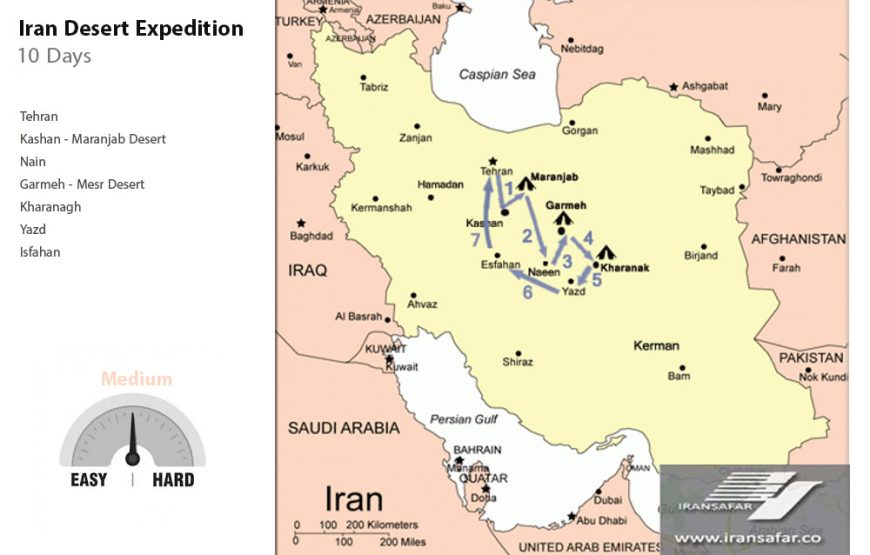
10 Days
Specific Tour
1 person
English, Español, Francais, German
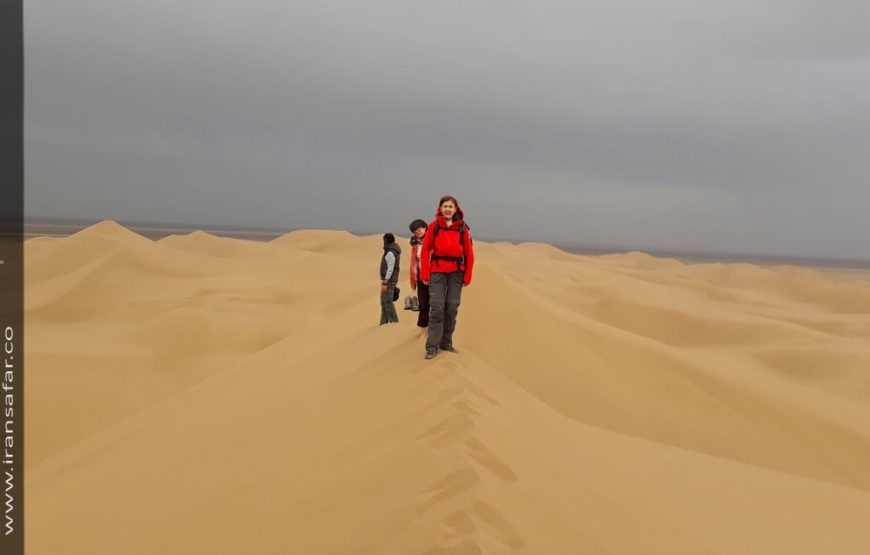
Iran is a country with hot and dry climate in general and one of the best desert destinations with a quarter of its area devoted to deserts. In every corner of the vast country of Iran, there are attractions that cater to different tastes. Iran Desert Tours are of the most popular activities that we plan and perform in Iran.
Iran is known as the land of four seasons due to its special geographical location. In some months of the year in the whole of Iran, the temperature range of -20 degrees to +20 °C can be recorded. This diversity of climate has made Iran a great tourist destination all year round.
Deserts of Iran are popular destinations for domestic and foreign tourists. The best time to travel to these deserts is October to April.
A large part of Iran is covered by deserts of Dasht-e Kavir and Lut desert in the center and southeast of the country. The best deserts destinations of Iran are located at the heart of these two. If you are planning to spend a great time in Iran deserts, with Iransafar Tours you can book a specific tour and record a memorable trip.
Our Desert Expedition programs is a mixture of Ecotourism and Sightseeing in Iran.
Upon arrival, your local guide will be waiting for you at the airport and you will drive you to the city.
Today, we explore the vibrant capital city of Tehran, starting with a visit to the National Museum of Iran. This museum houses an extraordinary collection of artifacts spanning from 5,000 BC to the advent of Islam in Iran, offering a fascinating overview of the country’s rich history and cultural heritage.
Next, we walk to the Golestan Palace Complex, a UNESCO World Heritage Site and one of the most splendid examples of Qajar-era architecture. The complex features beautifully adorned palaces set around elegant gardens, decorated with intricate mirrors, paintings, and glazed tiles, showcasing the artistic achievements of the Qajar dynasty.
Our day concludes with a visit to the Tehran Grand Bazaar, a bustling marketplace where you can experience the energy of the city, browse traditional goods, and purchase souvenirs.
After breakfast, we leave Tehran and drive towards Kashan, a charming oasis city on the edge of the central desert, known for its fine traditional architecture and historical houses.
Our sightseeing in Kashan begins with a visit to the Fin Garden, one of the most beautiful Persian gardens in Iran, and a UNESCO World Heritage Site. This garden, with its symmetrical design, flowing water channels, and cypress trees, represents the essence of Persian garden aesthetics.
Next, we explore the Tabatabaei Historical House, an elegant 19th-century mansion that reflects the artistry and craftsmanship of Kashan’s architecture, featuring exquisite stained glass windows, delicate plasterwork, and lovely courtyards.
We continue to the Agha Bozorg Mosque, a stunning example of Qajar-era religious architecture, famous for its harmonious proportions and symmetrical design.
In the late afternoon, we drive towards Maranjab Desert, located near Aran and Bidgol, where we’ll settle into our accommodation and enjoy the serene desert atmosphere under a starry sky.
Today, after breakfast, we head towards Naein, a historic town renowned for its ancient desert architecture and deep cultural roots.
Upon arrival, we visit the Jameh Mosque of Naein, one of the oldest mosques in Iran, dating back to the early Islamic period. Its simple yet elegant design reflects the early architectural style of Iranian mosques.
Next, we explore the Pirnia Traditional House, now serving as the Ethnographic Museum of Naein, where we can learn about the traditional lifestyle and customs of desert inhabitants.
We’ll also take a stroll through Naein’s old quarter, with its mud-brick alleys, windcatchers, and historic water reservoirs, offering a glimpse into traditional desert life.
After breakfast, we continue our journey through the desert landscapes to reach the beautiful oasis village of Garmeh, located in the heart of the Dasht-e Kavir desert.
Upon arrival, we settle into a local homestay, where you’ll experience genuine Iranian hospitality and enjoy a traditional home-cooked meal.
Spend the afternoon exploring Garmeh’s date palm groves, natural springs, and surrounding desert scenery. You may also have the chance to meet local residents and learn about their way of life in this remote desert community.
The evening will be spent relaxing in the tranquil atmosphere of the village, perhaps with traditional music and stories shared by locals.
We visit the nearby Salt Lake, where the white salt plains stretch endlessly to the horizon, creating a surreal landscape perfect for photography and reflection.
Later, we experience a traditional camel ride across the sand dunes, an unforgettable way to feel the rhythm of desert life.
Afterward, we return to Garmeh for another peaceful evening at our homestay, enjoying local cuisine and stargazing in the clear desert night sky.
This morning, we depart Garmeh and drive towards Kharanagh, with a stop at the sacred Chak Chak Zoroastrian Fire Temple, one of the most important pilgrimage sites for Zoroastrians. Nestled in the mountains, Chak Chak offers panoramic views and an insight into ancient Persian spiritual traditions.
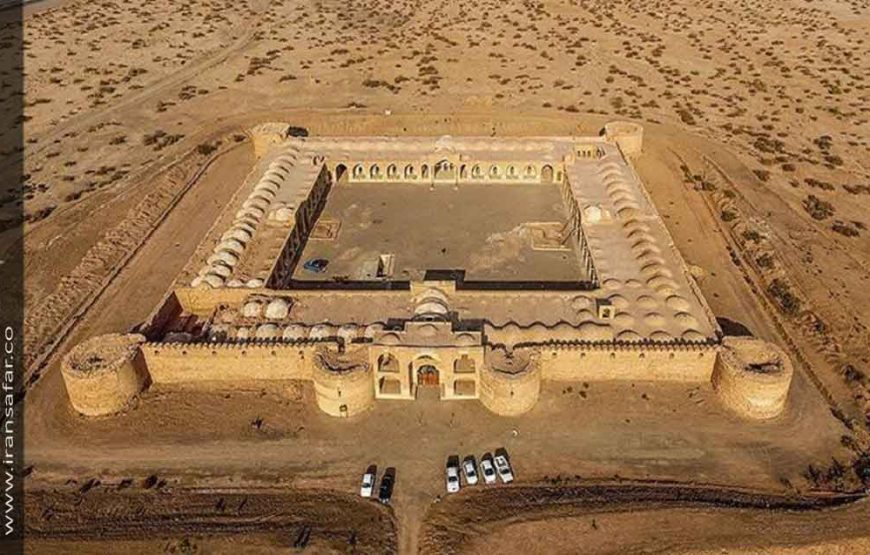
Continuing our journey, we reach the ancient village of Kharanagh, known for its abandoned mud-brick houses, watchtower, and historic caravanserai. Walking through the narrow alleys feels like stepping back in time.
In the evening, we set up camp under the desert sky, surrounded by the silence and mystery of Kharanagh’s ruins.
After breakfast, we drive to Yazd, one of the oldest continuously inhabited cities in the world and a UNESCO World Heritage Site.
Our sightseeing begins with a visit to the Amir Chakhmaq Complex, an impressive architectural landmark featuring a stunning façade of symmetrical alcoves.
Next, we visit the Jameh Mosque of Yazd, with its magnificent tiled entrance and towering minarets.
We continue to explore the Fahadan Old Quarter, a maze of narrow alleys lined with traditional adobe houses and windcatchers that embody Yazd’s unique desert architecture.
Before sunset, we visit the Zoroastrian Fire Temple, where the sacred flame has been burning for over a thousand years.
Overnight stay in the historical Zein-ol-Din Caravanserai, offering an authentic desert lodging experience.
This morning, we depart Yazd and begin our drive toward the beautiful city of Isfahan, one of Iran’s most enchanting destinations. The journey offers scenic views of vast desert landscapes and stretches of pistachio orchards along the way.
En route, we make a stop at the historic Meybod Caravanserai, a well-preserved example of traditional roadside inns that once served travelers and merchants along ancient trade routes. The site provides a fascinating glimpse into Iran’s Silk Road heritage.
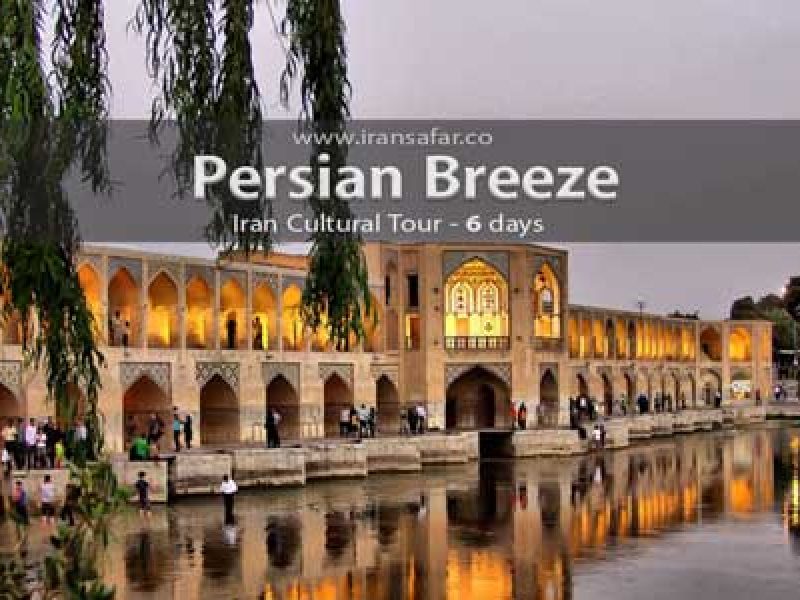
we begin our sightseeing by visiting the city’s famous si-o se pol bridge and Khaju Bridge—masterpieces of Safavid-era architecture. These elegant structures are not only functional but also social gathering places where locals stroll, sing, and enjoy the tranquil views of the Zayandeh River.
Today’s sightseeing begins at the splendid Naqsh-e Jahan Square (Imam Square), a UNESCO World Heritage Site and one of the most magnificent urban spaces in the world. Built in the early 17th century during the reign of Shah Abbas I, this vast square—second in size only to Tiananmen Square in Beijing—is surrounded by architectural masterpieces from the Safavid era.
We start with a visit to the Imam Mosque, easily recognized by its stunning blue tilework, soaring dome, and elegant minarets. Considered one of the most beautiful mosques in Iran, it stands as a true masterpiece of Islamic architecture.
Next, we explore the exquisite Sheikh Lotfollah Mosque, also known as the Ladies’ Mosque, believed to have served as a private place of worship for the royal women. Distinguished by its delicate cream-colored dome and intricate interior tile patterns, this mosque is a remarkable display of Safavid artistry and design.
We then visit the Ali Qapu Palace, an impressive six-story structure that once served as the royal residence and a ceremonial gateway between the square and the royal gardens. From its elevated terrace, you’ll enjoy a magnificent view over Naqsh-e Jahan Square. Inside, the palace features beautifully painted rooms and an extraordinary music hall with finely carved stucco decorations designed to enhance acoustics.
Our exploration continues through the Qeisarieh Bazaar, located on the northern side of the square, where hundreds of workshops and shops showcase traditional crafts, carpets, miniature paintings, and souvenirs unique to Isfahan.
Finally, we visit the elegant Chehel Sotun Palace (UNESCO Site), meaning “Palace of Forty Columns.” Set amidst a lush garden and reflected in a tranquil pool, this graceful pavilion was built under Shah Abbas II for royal receptions and entertainment. Its grand halls and intricate murals vividly depict scenes of Persian history and courtly life.
Today, we continue exploring the cultural treasures of Isfahan before departing to Teran.
Our first stop is the Julfa Armenian District, one of the oldest and most charming neighborhoods of Isfahan. Established in the early 17th century when Shah Abbas I relocated a community of Armenian merchants from the town of Julfa, this vibrant quarter is known for its unique blend of Persian and Christian influences, cozy cafés, and art galleries.
Within this district, we visit the remarkable Vank Cathedral (Vank Church), one of the most beautiful and historically significant churches in Iran. Built in the mid-1600s, it features a stunning interior decorated with elaborate frescoes, gilded carvings, and blue-and-gold tiles that illustrate scenes from the Bible and Armenian history.
We then visit the Jameh Mosque of Isfahan (Friday Mosque), a UNESCO World Heritage Site and one of the oldest and most important mosques in Iran. Its architectural evolution spans over a thousand years, representing nearly every major period of Iranian Islamic architecture—from early Abbasid brickwork to grand Seljuk domes and Safavid tilework.
0 review
3 reviews

Leave a review