from 0 review
21 days
Specific Tour
1 person
English, Español, Francais, German

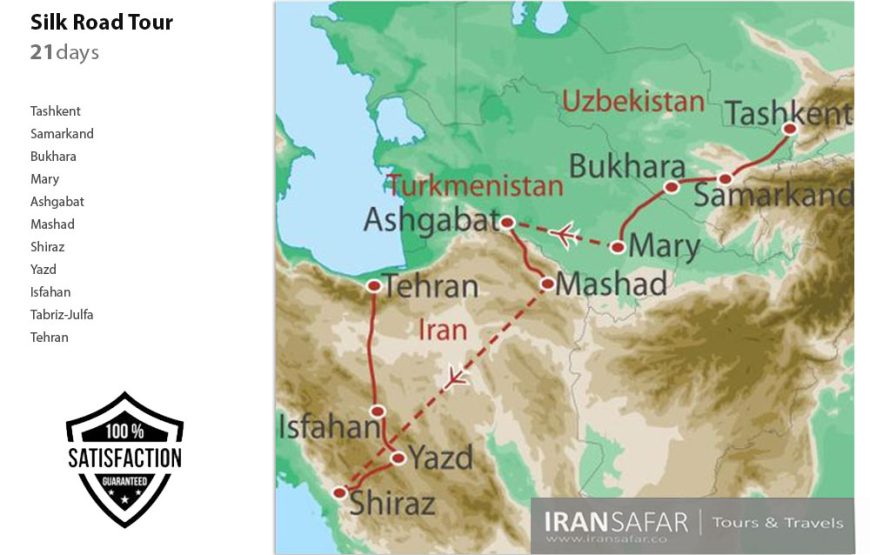
Traditionally, embarking on a Silk Road tour has always attracted adventurous explorers from all over the world. Central Asia may be most famous as the heart of the Silk Road. This region is ethnically, culturally and geographically one of the most diverse parts of the world. A cultural crossroad between Asia, Europe and the Middle East, it was across these remote lands that nomadic empires, conquerors and Silk Road traders traversed, leaving behind a rich cultural and archaeological legacy. Our Silk Road trip takes you to the countries of Uzbekistan, and Turkmenistan, and Iran. Below we give you a quick introduction to this trip .
Central Asia has long tugged at the heartstrings of the adventurous. With its sunny blue skies and striking landscapes, spectacular ancient cities and Islamic architecture, complex histories and fascinating cultures; it’s easy to see why this is such a captivating region.
Strategically positioned along the Silk Route, the cities of Samarkand and Bukhara were famous trading hubs for the merchants that passed along this way in ancient times. Our journey follows their footsteps, discovering magnificent architecture and bustling local markets that have changed little since the rule of Tamerlane. Iran was also regarded as one of the important parts on the legendary Silk Road between China and the West.
Our Silk Road trip takes you to Turkmenistan, Uzbekistan and Iran. Below we give you a quick introduction to each of them.
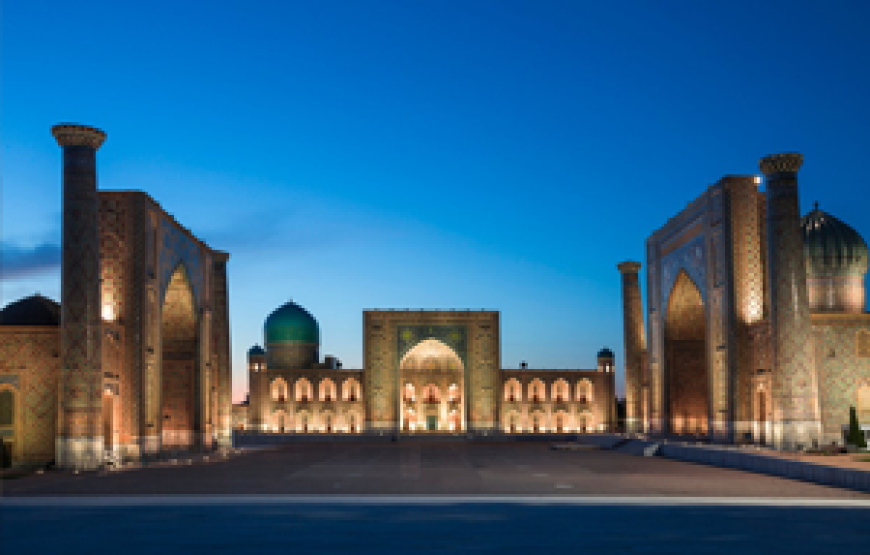
Tashkent is Uzbekistan’s busy capital and your arrival point of your Silk Road tour. Like Iran, It is also a welcoming land of contrasting desert and mountain landscapes. In Bukhara, you can explore an ancient maze of old houses, mosques and amazing labyrinthic bazaars. A little further east, admire the grace of the blue-tiled Registan in Samarkand. Travel more north and you can discover the traditional way of life of the local people in the Nurata Mountains, where there are hidden petroglyphs from the Stone and Bronze Age.
Turkmenistan is Central Asia’s least visited and most mysterious country. It was mostly closed to the outside world until as recent as the early 2000s. Ancient conquerors, nomadic empires and Silk Road traders used to traverse across these remote lands. They left behind a rich cultural and archaeological legacy that includes the former oasis city of Merv (highly important in the heydays of the Silk Road), Karakum Desert, ancient ruins of Nisa and beautiful mosques, museums and monuments.
Fans of ancient history, intricate designs in art and architecture, romantic poets and spirituality will find the country of Iran a true treasure to visit. At the same time, nature lovers will be pleased to find accessible snow-clad mountains and mixed deserts to explore. Interesting places like Alexander the Great’s Persepolis, the impressive square and bridges of Isfahan, and tremendously decorated mosques and caravanserais will give you plenty to explore. An expedition to the summit of Mount Damavand allows you stunning views over the former Silk Road routes in the Alborz Mountain range, Caspian plain and deserts of Iran.
On our overland journey from Uzbekistan to Iran we trace the western section of the Silk Road, a bustling corridor through which caravans laden with goods would pass en-route to the ancient city of Constantinople. Travelling to the renowned Central Asian cities of Tashkent, Samarkand, Bukhara and Merv we gain a rich sense of the intricate history, before crossing the awesome expanses of both the Karakum desert and the high mountain that link Central Asia and Persia. Our trip features a dramatic mountainous drive across the Kopet Dag Mountains to Iran, a land of dramatic contrasts. Ranging from snow clad mountains, deserts, oasis towns and ancient cities that reveal a deep and rich history. We diverge from the traditional Silk Road itinerary with exciting excursions to Isfahan, Shiraz and Persepolis, the summer capital of the vast Persian Empire, before concluding this epic journey in the vibrant city of Tehran.
Retrace history as you explore the stunning oasis cities of the west part of the Silk Road. You will admire the vaulted domes, towering minarets and intricate tile work of medieval Islamic architecture. Visit imperial palaces, mosques, mausoleums. Wander the cobbled streets of historic walled towns and shop colorful wares and handcrafts in ancient bazaars!
Your adventure begins in Tashkent, a lively city where modern life blends easily with deep history. After settling in, you’ll start exploring some of its highlights — the peaceful courtyards of the Khast-Imam Ensemble, the Chorsu Bazaar, and the traditional beauty of the Kukeldash Madrassah nearby. You might stroll through Navoi Park, visit the Applied Arts Museum to admire exquisite Uzbek craftsmanship, or ride the city’s metro to see its beautifully decorated stations. With optional visits to the Tashkent TV Tower for a sweeping view over the city, your first day gives you a warm, colorful introduction to Uzbekistan.
This morning you transfer to the train station to board the high-speed “Afrosiab” train from Tashkent to Samarkand. After arriving and checking in, you begin exploring one of the most remarkable cities on the Silk Road. Samarkand has experienced countless historical eras — from Alexander the Great and the Arab conquests to the Mongol invasion and the reign of Tamerlane — resulting in a distinctive culture shaped by Persian, Indian, and Mongolian influences.
Your sightseeing program starts with a visit to the Afrosiab excavation site and its museum, home to a rare 7th-century wall painting that provides insight into Samarkand’s earliest days. You then continue to the serene Mausoleum of Prophet Daniel (Doniyor), a sacred place respected by Muslims, Christians, and Jews alike. The tour also includes the Khazrat-i Khizr Mosque, followed by the Ulugbek Observatory, an advanced astronomical center built in 1428–1429 by Timur’s scholarly grandson.
Next, you visit the magnificent Gur-Emir Mausoleum, the resting place of Tamerlane and his descendants, known for its striking architecture and deep historical significance. The day concludes with a visit to the Meros Silk Paper Center, where artisans have revived the ancient method of producing Samarkand paper using traditional techniques.
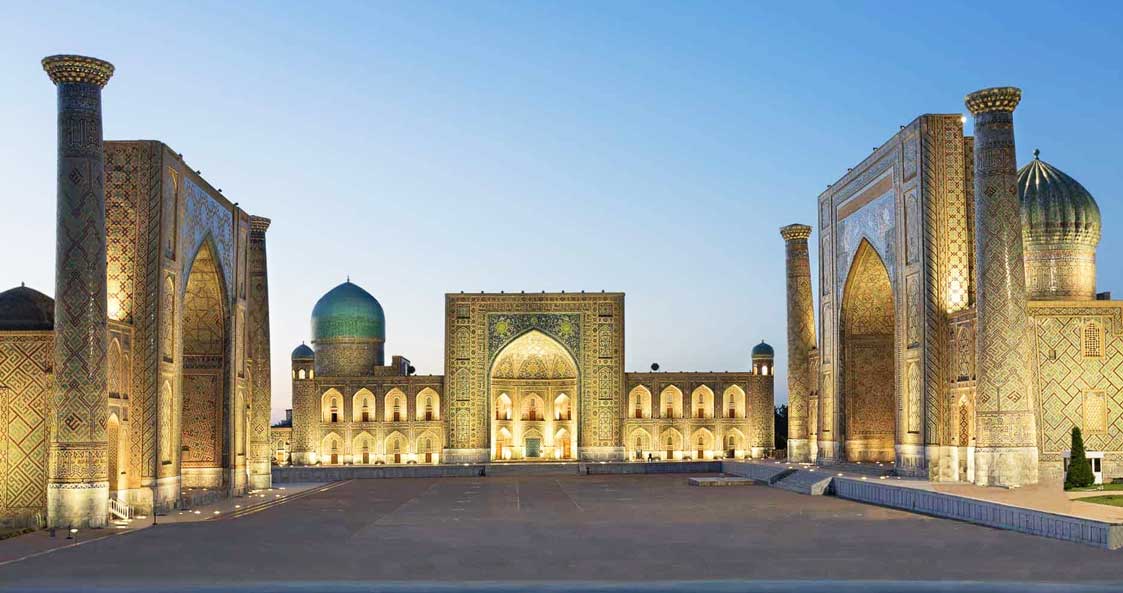
Today is devoted to discovering the very best of Samarkand. Your tour begins at the world-famous Registan Square, the majestic heart of the city since the time of Tamerlane. Surrounded by three grand madrasahs — Ulugbek Madrassah (1417–1420), Sher-Dor Madrassah (1619–1636), and Tilla-Kori Madrassah (1646–1660) — the square is one of the most impressive architectural ensembles in the Islamic world.
You continue to the beautiful Bibi-Khanum Mosque, built in honor of Tamerlane’s beloved wife and once considered one of the largest and most magnificent mosques in Central Asia. Afterward, you’ll stroll through the lively Siab Bazaar (closed on Mondays), the city’s colorful market where locals sell fresh produce, sweets, spices, and traditional goods — a perfect place to experience daily life in Samarkand.
Your next stop is the sacred Shakhi-Zinda Necropolis, an extraordinary collection of mausoleums dating from the 11th to the 19th centuries. According to legend, the complex was built around the tomb of Kussam ibn Abbas, a cousin of the Prophet Muhammad and one of the earliest Islamic missionaries in the region.
This morning you transfer to the station for the high-speed “Afrosiab” train from Samarkand to Bukhara. Upon arrival, you enter a city known for its exceptionally rich architectural heritage — a place filled with caravanserais, trading domes, historic bathhouses, defensive walls, ancient gates, khanakas, mosques, madrassahs, and beautifully decorated mausoleums.
Your sightseeing tour begins at the Lyabi-Khauz Complex, a serene square built around a historic pool. The ensemble includes the Nodir Divan-Begi Madrassah (17th century), the Kukeldash Madrassah (16th century), and the Nodir Divan-Begi Khanaka (17th century), each offering a different glimpse into Bukhara’s religious and cultural past.
A special highlight is a visit to the workshop of a renowned Bukhara puppet maker, where you can watch traditional performances based on local legends and humorous tales of the beloved folk character Nasriddin Effendi.
Continue to the Magoki-Attari Mosque (12th–16th centuries), one of the oldest surviving Islamic structures in Central Asia. From here, you walk through Bukhara’s restored trading domes — the atmospheric markets of the old city. These include Tok-i-Zargaron (Jeweler’s Bazaar, 1570), Tok-i-Tilpak Furushon (Cap Makers’ Bazaar), and Tok-i-Sarrafon (Moneychangers’ Bazaar), each with its own historic charm.
Next, visit the iconic Poi-Kalyan Ensemble, the symbol of Bukhara, with its towering minaret and harmonious architectural layout. Nearby, explore the Ulugbek Madrassah (1417), notable for its refined and elegant decoration despite its modest façade. Just across from it stands the Abdulaziz-Khan Madrassah, built in the mid-17th century and considered superior in size, detail, and color.
Your tour also includes Tim Abdullakhan, a historic covered market once famed for its luxurious textiles. You will then stop at a silk-weaving workshop, where local artisans still produce silk fabrics and threads using traditional techniques, just as they did in the days when wool, cotton, and silk were major commodities of Central Asia.
Your exploration of Bukhara continues today with a visit to Chor Minor, a charming madrassah known for its four distinctive towers, each topped with a unique design. Originally serving as a library for students.
You then leave the old town for a countryside excursion to Sitora-i-Mokhi-Khosa, the elegant summer residence of the last Emir of Bukhara. The palace blends traditional Bukharan design with influences from Russian and European architecture, creating a beautifully ornate and atmospheric retreat.
Next, you visit the spiritually significant Bahauddin Naqshbandi Complex, the burial site of Sheikh Bahauddin Naqshband, founder of the Naqshbandi Sufi Order.
Returning to the city, your tour continues with a visit to the mighty Ark Fortress, the ancient citadel that once served as the residence of Bukhara’s emirs. Its massive walls and museum rooms offer fascinating insights into the city’s political and military history. Nearby stands the elegant Bolo-Khauz Mosque, with its carved wooden columns reflected beautifully in the pool that gives the mosque its name.
You will also see the Chashma-Ayub Shrine (14th–16th centuries), associated with the legend of the Prophet Job and known for its healing spring. Your final stop of the day is the Samanid Mausoleum, one of the masterpieces of early Central Asian architecture, celebrated for its harmonious brickwork and perfect proportions.
Today you leave Bukhara behind and journey toward the Turkmenistan border. After completing border formalities, your road takes you into Mary — an ancient oasis city in the Karakum Desert. As you travel, you’ll notice how the landscape slowly changes, from lush oases to more arid terrain, hinting at the vast history of caravan routes that once crisscrossed these sands. Upon arrival in Mary, you settle into your accommodation, ready to explore the region’s rich Silk Road legacy over the next days.
Today’s highlight is Merv, one of the most significant archaeological sites in Central Asia and a major Silk Road hub in its prime. You’ll walk through the vast ruins spread across multiple city-states — Erk Kala, Gyaur Kala, Sultan Kala, and more — taking in ruined fortresses, mausoleums, and remnants of medieval strongholds. These sites tell stories of Parthian, Persian, Seljuk, and Mongol eras. In the late afternoon, return to Mary for dinner and a restful evening, reflecting on the scale and importance of this once-mighty city.
Leave Mary and head toward Ashgabat, Turkmenistan’s striking capital. The drive offers wide desert vistas and glimpses of modern Turkmen life. Upon arrival, you’ll explore Ashgabat’s unique skyline — gleaming white marble buildings, sweeping boulevards, and grand monuments. The contrast between the ruins of Merv and this modern capital is dramatic, underscoring how Turkmenistan has reinvented parts of its identity while still rooted in its ancient heritage.
This morning, you depart Ashgabat and journey across the border into Iran, making your way to Mashhad — one of the holiest cities in the country. The drive will take you through rugged terrain, shifting from Turkmen desert to Iranian landscapes.
On the way to Mashhad we will visit Tus, birthplace of the epic poet Ferdowsi, and visit his grand mausoleum surrounded by peaceful gardens.
Today you visit the magnificent Imam Reza Shrine Complex, a vast and ornate ensemble of courtyards, domes, and museums that draws millions of visitors each year. Later, explore the local bazaars, famous for saffron, turquoise, and handicrafts. Don’t miss trying the city’s signature saffron ice cream.
You will fly to Shiraz in the evening.
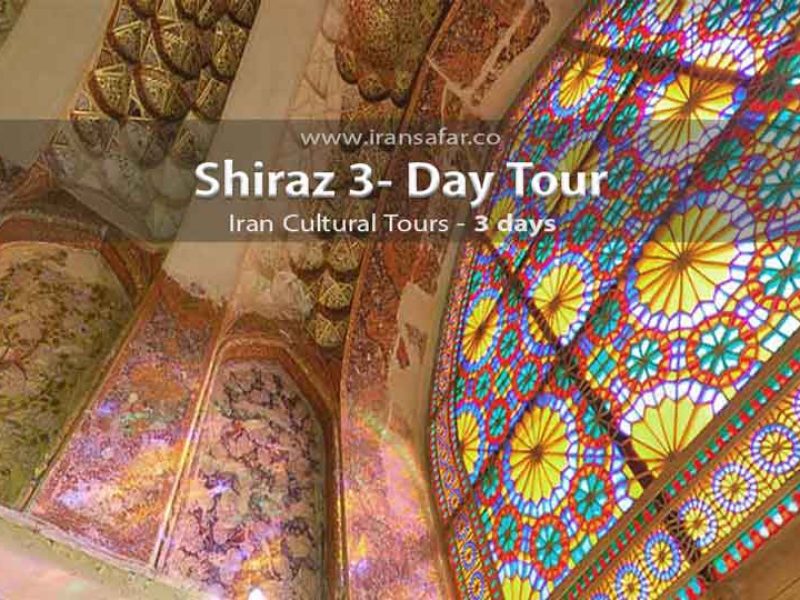
Today morning you visit Shiraz, a city celebrated for its poetry, gardens, and elegant Islamic architecture. Upon arrival, your sightseeing begins at the enchanting Nasir al-Molk Mosque, known as the Pink Mosque. Built in 1888 during the Qajar Dynasty, its vibrant stained-glass windows and delicate pink tiles create a magical display of color as sunlight filters through the prayer hall.
Next, enjoy a peaceful walk to the fragrant Narenjestan Garden (Qavam House), a 19th-century masterpiece built by the influential Qavam family. This historic residence is renowned for its intricate mirror work, delicate wooden carvings, and courtyards filled with citrus trees.
Continue your tour at the beautiful Imamzadeh Ali ibn Hamzeh Shrine, admired for its shimmering mirror mosaics and spiritual atmosphere. Afterwards, visit the elegant Vakil Mosque, celebrated for its harmonious architecture and exquisite tilework, followed by time to explore the lively Vakil Bazaar, where hundreds of traditional shops offer handicrafts, spices, textiles, and local goods within picturesque courtyards and vaulted alleys.
You conclude the day at the serene Tomb of Hafez, the resting place of Iran’s most beloved poet, set amid tranquil gardens that reflect the spirit of Persian literature and romance.
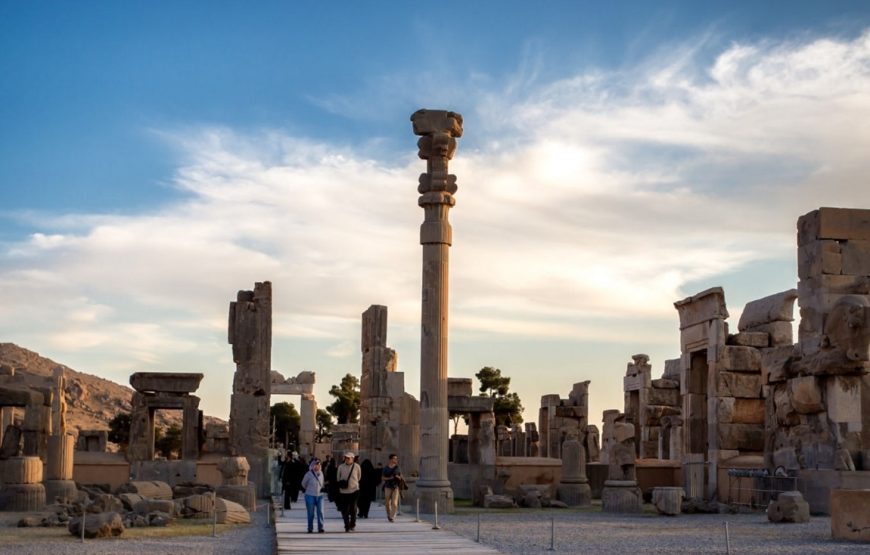
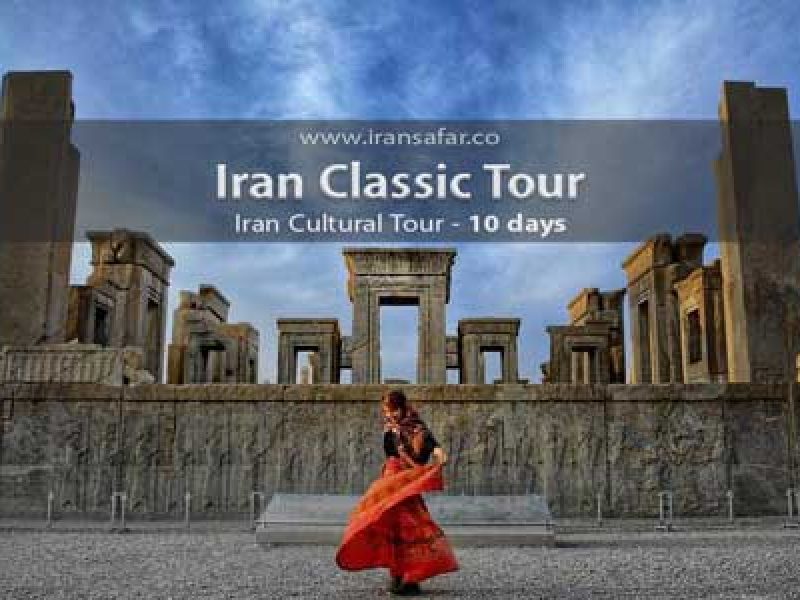
Today, the first stop will be the majestic Persepolis Complex (UNESCO World Heritage Site), where the visit is planned in the morning to explore before the crowds. Founded by Darius I around 512 BC, Persepolis served as the ceremonial capital of the Achaemenid Empire—the largest empire of its time. Successive kings, including Xerxes I, expanded the site over the following centuries, leaving behind magnificent palaces, staircases, and bas-reliefs that tell the story of ancient Persia’s grandeur. A detailed guided tour will bring this monumental site to life, with approximately three hours dedicated to exploration.
A short drive from Persepolis takes us to Naqsh-e Rostam (UNESCO Site), an impressive necropolis featuring the rock-cut tombs of Darius the Great and his successors. The towering cliffside carvings and Sassanian reliefs here vividly depict royal ceremonies and victories.
Today, we embark on a scenic 550 km journey from Shiraz to Yazd, traveling through some of Iran’s most historic and beautiful landscapes. Along the way, we will explore Pasargadae (a UNESCO World Heritage Site), the first capital of the Achaemenid Empire. This archaeological complex features the remains of ancient palaces, royal gardens, and the Tomb of Cyrus the Great, the visionary founder of the Persian Empire, dating back to the 6th century BC.
Upon arriving in Yazd, our visit begins with the Towers of Silence, circular stone structures situated on the outskirts of the city. Until the mid-20th century, Zoroastrians used these elevated platforms as part of their ancient funerary tradition, exposing the deceased to the natural elements.
Today, we explore Yazd—one of the world’s oldest continuously inhabited cities and a UNESCO World Heritage Site. Its historic center, with winding alleys, adobe dwellings, and iconic wind towers (badgirs), reflects centuries of ingenious desert architecture and rich cultural heritage. Yazd is also the spiritual heart of Iran’s Zoroastrian community, and our day begins with visits to some of its most important sacred sites.
We start at the Zoroastrian Fire Temple, which houses a revered flame said to have burned for more than 1,500 years, symbolizing purity and eternal light.
Our journey continues to the Amir Chakhmaq Complex, an architectural landmark that dominates the city’s main square. Originally built in the 15th century by Amir Jalal al-Din Chakhmaq, this stunning structure—once a tekyeh used for religious gatherings—features harmoniously arranged alcoves and a grand façade that glows beautifully at sunset.
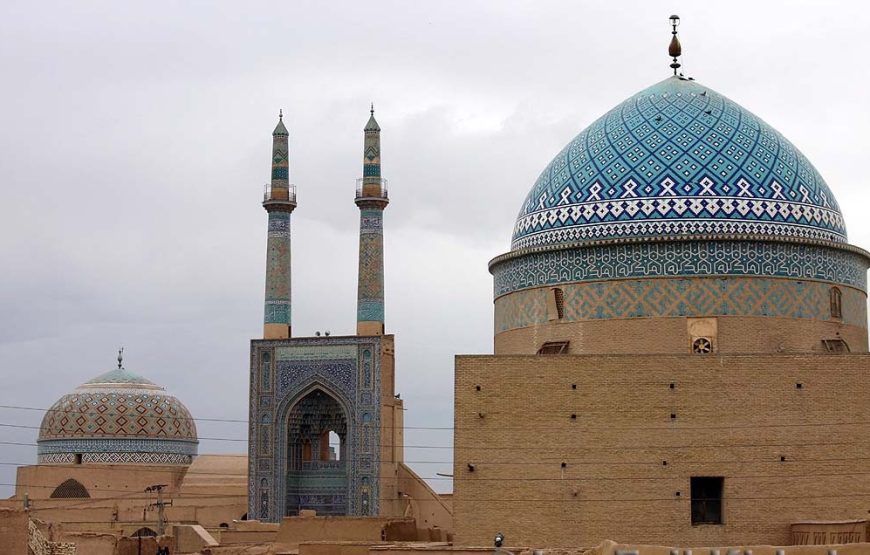
Next, we visit the Friday Mosque of Yazd (Jameh Mosque), completed in 1324 and celebrated for its exquisite tilework and the tallest minarets in Iran.
We end the day wandering through Yazd’s old town, where mud-brick architecture, serene courtyards, and quiet lanes offer an evocative glimpse into the timeless rhythm of desert life.
This morning, we depart Yazd and begin our journey toward the beautiful city of Isfahan, one of Iran’s most enchanting destinations. Along the way, the landscape unfolds into sweeping desert plains and stretches of pistachio orchards.
Our first stop is the historic Meybod Caravanserai, a well-preserved example of the traditional roadside inns that once welcomed travelers and merchants along ancient trade routes. This fascinating site offers a vivid glimpse into Iran’s Silk Road heritage.
We then continue to the renowned Nain Jameh Mosque, one of the oldest and most significant mosques in Iran.
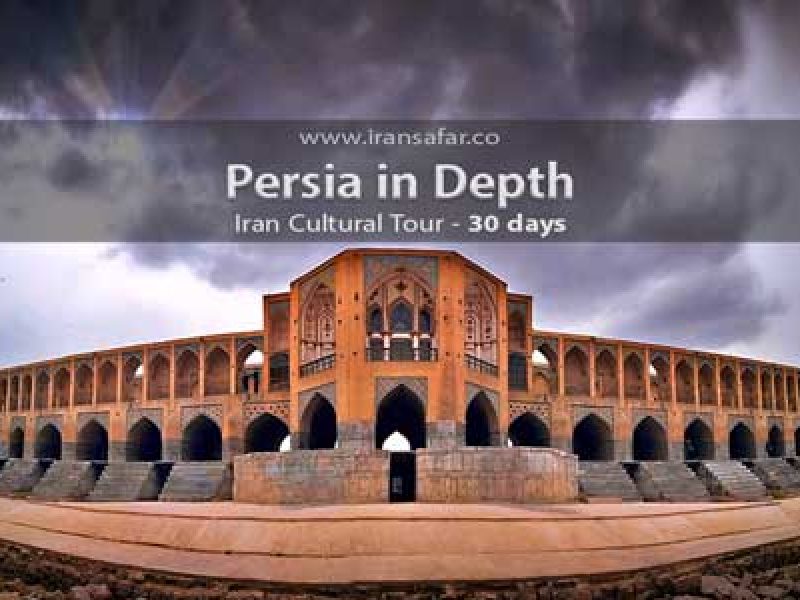
Upon arrival in Isfahan, we begin our exploration with a visit to the iconic Khaju Bridge—an architectural masterpiece from the Safavid era. This elegant structure is both functional and social, serving as a beloved gathering place where locals stroll, sing, and enjoy serene views of the Zayandeh River.
Today’s sightseeing begins at the magnificent Naqsh-e Jahan Square (Imam Square), a UNESCO World Heritage Site and one of the world’s most breathtaking urban ensembles. Built in the early 17th century under Shah Abbas I, this vast square—second in size only to Beijing’s Tiananmen Square—is surrounded by some of the finest architectural achievements of the Safavid era.
We begin with the Imam Mosque, instantly recognizable by its dazzling blue tilework, grand dome, and graceful minarets. Widely regarded as one of Iran’s most beautiful mosques, it is a true masterpiece of Islamic architecture.
Next, we visit the exquisite Sheikh Lotfollah Mosque, also known as the Ladies’ Mosque, believed to have served as a private sanctuary for the royal women. Its soft cream-colored dome and intricately patterned interior tiles make it one of the most refined examples of Safavid artistry.
Our tour continues with the Ali Qapu Palace, a striking six-story structure that once served as the royal residence and ceremonial gateway between the square and the royal gardens. From its elevated terrace, you can marvel at sweeping views over Naqsh-e Jahan Square. Inside, the palace features beautifully painted chambers and a remarkable music hall adorned with delicately carved stucco niches designed to enhance acoustics.
We then make our way through the Qeisarieh Bazaar on the northern side of the square. Here, bustling workshops and shops offer traditional crafts, fine carpets, miniature paintings, and unique souvenirs that reflect Isfahan’s artistic heritage.
Finally, we visit the elegant Chehel Sotun Palace (a UNESCO World Heritage Site), meaning “Palace of Forty Columns.” Set within a lush garden and reflected beautifully in a long pool, this graceful pavilion was built under Shah Abbas II for royal receptions and festivities. Inside, its grand halls and vivid murals bring to life scenes of Persian history, diplomacy, and courtly ceremonies.
This morning, we depart Isfahan and begin our drive toward the historic city of Kashan, known for its traditional architecture, lush Persian gardens, and beautifully preserved merchant houses.
On the way, we stop at the charming village of Abyaneh (optional if desired), known for its red-mud houses, traditional clothing, and picturesque mountain setting.
Upon arrival, we visit the Fin Garden, one of Iran’s most celebrated Persian gardens, where flowing water channels, ancient cypress trees, and elegant pavilions create a serene atmosphere.
Today we explore the historic Tabatabaei House, an exquisite 19th-century residence famed for its intricate stucco work, stained-glass windows, and elegant courtyard design.
Next, we visit the Sultan Amir Ahmad Bathhouse, one of the finest traditional hammams in Iran, admired for its turquoise and gold tilework, domed ceilings, and atmospheric interior spaces.
The remainder of the day is spent wandering through Kashan’s old town, where narrow lanes, mud-brick walls, and centuries-old traditions offer a glimpse into the city’s rich cultural heritage.
Today, we leave Kashan and continue our journey north toward Tehran, the modern capital of Iran.
Upon arrival in Tehran, depending on time and schedule, you may enjoy a brief orientation drive through the city, taking in its mix of historic landmarks and contemporary urban life.
The remainder of the day is at leisure to relax, explore the surroundings, or prepare for your departure.
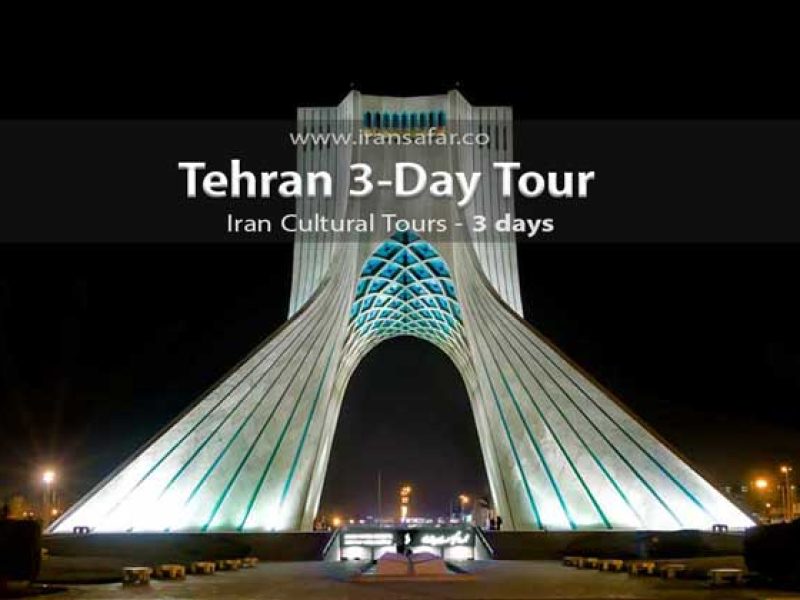
Today, we explore the vibrant capital city of Tehran, starting with a visit to the National Museum of Iran. This museum houses an extraordinary collection of artifacts spanning from 5,000 BC to the advent of Islam in Iran, offering a fascinating overview of the country’s rich history and cultural heritage.
Next, we walk to the Golestan Palace Complex, a UNESCO World Heritage Site and one of the most splendid examples of Qajar-era architecture. The complex features beautifully adorned palaces set around elegant gardens, decorated with intricate mirrors, paintings, and glazed tiles, showcasing the artistic achievements of the Qajar dynasty.
Our day concludes with a visit to the Tehran Grand Bazaar, a bustling marketplace where you can experience the energy of the city, browse traditional goods, and purchase souvenirs.

Leave a review