
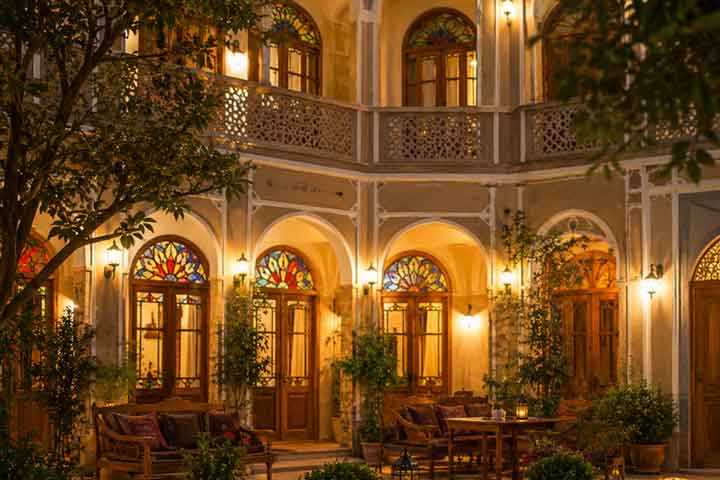
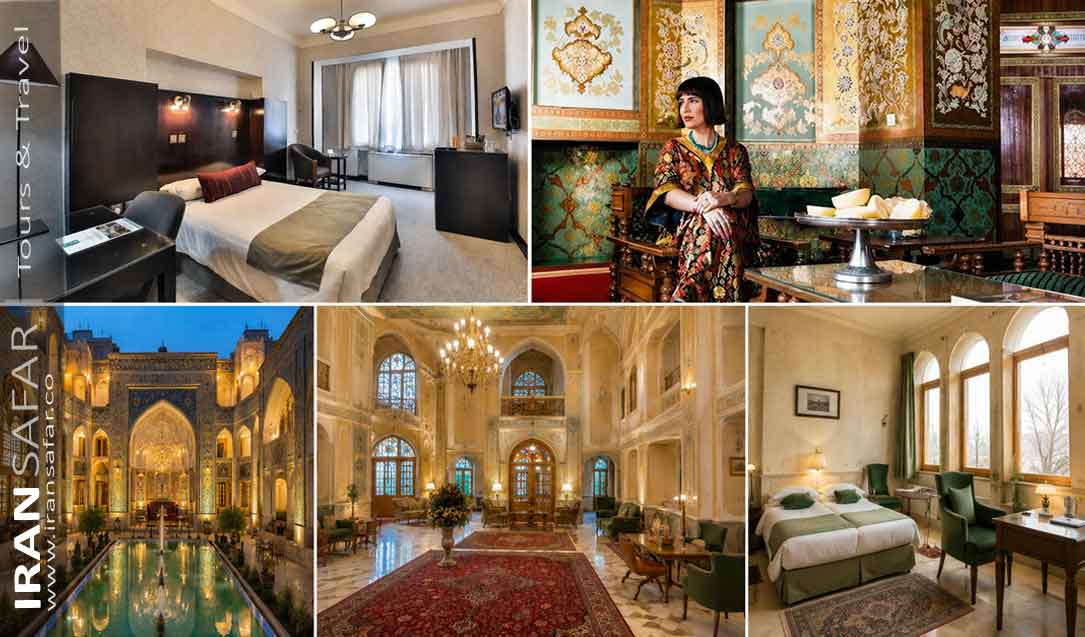
Finding good hotel in Iran is easy once you know what to expect. Iran offers modern hotels with familiar facilities, as well as traditional houses, old mansions, and boutique hotels that can make your trip more special. Before you arrive, there are a few important things to know. International cards such as Visa and Mastercard generally do not work in Iran, so payment needs some planning. Hotel check-in, passport registration, internet access, and bathroom facilities may also be different from what you are used to. In cities such as Tehran, Isfahan, Shiraz, Yazd, and Kashan, you can find many types of accommodation. You can stay in a modern five-star Iran hotels or choose a traditional hotel with a beautiful courtyard, colorful windows, and historic architecture.
Here are 10 useful things to know about hotels in Iran before your trip.
1
Make Your Hotel Part of Your Iran Experience
One of the best things about staying in Iran is the chance to sleep in a traditional boutique hotel. In historic cities such as Kashan, Yazd, Isfahan, and Shiraz, many old Persian houses and mansions have been restored and converted into small hotels.
These are not ordinary hotels. Many were once private homes belonging to wealthy families or merchants. They often have a central courtyard, a small garden, fountains, traditional windows, old wooden doors, and beautiful Persian decorations.
Today, these historic buildings have been updated for travelers. You can still enjoy the old architecture while having modern facilities such as air conditioning, Wi-Fi, comfortable beds, and private bathrooms.
The experience can be very different from staying in a large international hotel. Instead of a big lobby with hundreds of rooms, you may have breakfast in a quiet courtyard surrounded by flowers and traditional architecture.
For travelers who love history, architecture, photography, and local culture, this type of hotel can become one of the highlights of the trip.
Of course, traditional hotels are not perfect for everyone. Some historic buildings do not have elevators, and rooms can be smaller or have unusual layouts. If you need specific facilities, always check the hotel details before booking.
Also Read: Best Boutique Hotels of Iran
2
A Taste of Iran Begins at Breakfast
Breakfast is another nice part of staying in an Iranian hotel. Most hotels that welcome international travelers offer breakfast, and many include some traditional Iranian foods. You can usually expect things such as fresh bread, cheese, butter, jam, honey, eggs, tomatoes, cucumbers, and tea. The exact menu depends on the hotel. Larger hotels may also offer an international breakfast with fruit, cereals, pastries, and hot dishes.
Bread is an important part of Iranian food culture. You may find several types of fresh bread at breakfast, often served with cheese, vegetables, jam, or other simple foods.
And then there is tea. Persian tea is a big part of everyday life in Iran. It is served at breakfast, after meals, when guests visit, and at many other times during the day.
The setting can make breakfast even more enjoyable. Imagine sitting in the courtyard of an old hotel in Kashan, surrounded by flowers and traditional architecture, with fresh bread and a glass of hot tea in front of you.
That is a very different experience from having breakfast in a standard hotel restaurant.
If breakfast is important to you, check what is included in your booking. The breakfast style can be quite different from one hotel to another.
Also Read: Most Unusual Hotels in Iran
3
Internet in Iran Hotels
Most tourist hotels in Iran offer Wi-Fi, so you can usually connect to the internet when you return to your hotel. However, the quality of the connection can vary between hotels.
If you need internet access during the day, it is better not to depend only on hotel Wi-Fi. You may be visiting museums, bazaars, historical sites, restaurants, or other places where hotel internet is obviously not available.
For this reason, many travelers choose to get an Iranian SIM card with mobile data. Having mobile internet can make your trip much easier, especially if you need maps, messaging, online information, or communication with your guide or driver.
There is one important thing to understand. Internet access in Iran is not exactly the same as in many Western countries. Some websites and social media platforms are restricted or filtered, and the situation can change.
A local SIM card can give you mobile internet, but it does not mean that every website or online service will necessarily be available.
If staying connected is important for your trip, ask your travel company or hotel about the current SIM-card options before or after you arrive.
4
Iran Hotels’ Stars
When choosing a hotel in Iran, don’t look only at the number of stars. A small traditional hotel with excellent service and a great location can sometimes be a better choice than a larger hotel with a higher star rating. Think about what you actually need from your hotel.
If you are visiting Iran mainly for history and culture, you may prefer a hotel close to the old city or major attractions. A beautiful traditional house in central Kashan or Yazd may be much more interesting to you than a modern hotel outside the historic area.
If you are traveling for business, you may prefer a modern hotel with larger rooms, meeting facilities, restaurants, and easy transportation.
When choosing hotels, it is useful to look at several things, including:
- Location
- Cleanliness
- Room quality
- Service
- Breakfast
- Available facilities
- Value for money
- Recent traveler reviews
Recent reviews can be especially helpful. They can tell you things that hotel photographs don’t always show.
For example, a hotel may look beautiful but have many stairs. Another hotel may look simple but have an excellent location and very helpful staff. The best hotel is not always the most expensive hotel. It is the hotel that fits your travel style.
5
English Is Common
If you don’t speak Persian, you may wonder how easy it will be to communicate at most Iran hotels. The good news is that staff at hotels that regularly welcome international travelers usually speak some English, especially at the reception desk.
You can normally ask reception staff for help with common things such as taxis, restaurants, sightseeing, breakfast times, or directions.
The level of English will naturally be different from one hotel to another. A large hotel in Tehran may have several fluent English speakers, while a small family-run hotel in a historic town may have more basic English. But you will usually find that hotel staff are used to helping foreign guests.
Iranian hospitality is also an important part of the hotel experience. Staff may spend time helping you find a restaurant, arrange transportation, or answer questions about the city.
If you are traveling with a tour company, you will also have someone who can help if you have a more complicated problem. So don’t worry too much about the language barrier. You do not need to speak Persian to travel comfortably around Iran.
6
Know When You Can Check In and Check Out
Most hotels in Iran follow a fairly familiar schedule. A common check-in time is around 2:00 PM, while check-out is usually around 12:00 noon. However, the exact times can be different from one hotel to another. This can be important if you arrive early in the morning.
For example, imagine your flight lands in Tehran at 6:00 AM. Your hotel room may not be ready until the normal check-in time.
If a room is already available, the hotel may allow you to check in early. Some hotels may charge an additional fee for guaranteed early check-in.
If your room is not ready, you can usually leave your luggage at the hotel and go out to explore the city.
The same applies when you leave Iran. If your flight is late in the evening, ask about late check-out. Depending on availability, the hotel may allow you to keep the room for a few extra hours, sometimes for an additional fee.
It is a good idea to tell your hotel your arrival and departure times before you travel. This is especially useful when you have a very early arrival or late-night flight.
7
Your Passport Will Be Needed at Check-In
When you arrive at your hotel, the reception desk will normally ask to see your passport and visa information.
This is a normal part of registering foreign guests in Iran.
You should always keep your passport safe during your trip. It is also a good idea to have a digital copy of your passport and visa on your phone, as well as a paper copy stored separately.
Hotel procedures can vary. Some hotels may temporarily keep your passport as part of their registration process, while others may simply record the necessary information.
If the hotel keeps your passport, ask when you can get it back and let the staff know if you need it during your stay.
There is no need to be surprised when the receptionist asks for your passport. Hotels in Iran are used to welcoming foreign travelers, and passport registration is part of the normal process.
The simple rule is: bring your passport, keep a copy, and ask the hotel about its procedure when you check in.
8
Inside a Piece of Persian History
For many travelers, staying in a traditional Iranian hotel is one of the most memorable parts of the trip.
Some of these hotels are located inside historic houses and mansions that are hundreds of years old.
Traditional Persian houses were often built around a central courtyard. The courtyard could have trees, flowers, a fountain, colorful tiles, and rooms around the outside.
Many of these buildings were designed to provide privacy and help keep the house cool during Iran’s hot summers.
Today, some have been carefully restored and turned into hotels. Modern bathrooms, air conditioning, electricity, and other facilities have been added while many of the original features have been preserved.
This means you can actually stay inside a historic building rather than simply visit one for an hour.
Kashan is particularly famous for its historic houses and traditional accommodation. Yazd also has many hotels where traditional Persian and desert architecture is part of the experience.
There can be some small disadvantages. Historic buildings may have stairs instead of elevators, and rooms may not all have the same size or layout.
But for many visitors, these small differences are part of the charm.
If you want your hotel to be more than just a place to sleep, a traditional Iranian hotel is definitely worth considering.
9
Check the Bathroom Before You Book
Bathrooms are another small detail that is worth checking before booking your hotel in Iran.
Modern four- and five-star hotels generally have bathrooms that will feel familiar to most international travelers. Traditional hotels can be different.
Some bathrooms have Western-style toilets, while others may have different arrangements or additional washing facilities.
This is especially important in older buildings because the bathrooms may have been added during the restoration of the original house.
If you have a strong preference about the type of toilet or bathroom you use, check the room information before making your reservation. You can also ask the hotel or your travel company directly.
The same advice applies to other bathroom facilities. If you need a bathtub, walk-in shower, hairdryer, or other specific feature, don’t assume it will be available just because the hotel has a high rating.
Modern hotels are usually the safer choice if you want completely familiar facilities.
Traditional hotels are often the better choice if atmosphere and history are more important to you.
10
Don’t Expect Your Normal Bank Card to Work
This is one of the most important things to know before traveling to Iran. Bank cards issued outside Iran generally do not work in the country due to banking sanctions. This means you should not arrive expecting to pay for your hotel with your normal credit card or withdraw money from an Iranian ATM using your home bank card.
For many international travelers, the traditional solution has been to bring enough cash, such as euros or US dollars, and exchange it through appropriate exchange services in Iran. There are also tourist payment-card solutions that can allow eligible foreign visitors to make payments inside Iran. Availability and conditions can change, so check the latest information before your trip.
The most important thing is to plan your money before you arrive; Think about the cost of your hotel, food, transportation, entrance tickets, shopping, and other daily expenses. Do not assume that your usual credit card will be available as a backup.
Once you have planned your payment method, everyday spending becomes much easier.
What Should You Check Before Booking?
Before confirming your hotel, take a few minutes to check the following:
- Location: Is it close to the places you want to visit?
- Bathroom: Does your room have a private bathroom?
- Air conditioning: Is it available?
- Elevator: Does the hotel have one if you need it?
- Breakfast: Is breakfast included?
- Wi-Fi: Is internet available?
- Payment: How will you pay for the hotel?
- Check-in: What time can you enter your room?
- Luggage: Can the hotel store your bags?
- Reviews: What are recent guests saying?
These details may seem small, but they can make a big difference to your stay.
Hotel Chains in Iran
Iran has several local hotel chains and hotel groups that operate properties across major tourist destinations. While international hotel brands are limited in the country, these Iranian groups offer a range of accommodation, from business and luxury hotels to more traditional and affordable options. Some of the better-known Iran hotel chains include
Their properties can be found in cities such as Tehran, Mashhad, Shiraz, Isfahan, Tabriz, Kish, and Bandar Abbas.
FAQs About Hotels in Iran
Are hotels in Iran suitable for foreign travelers?
Yes. Many hotels in Iran regularly welcome international visitors, especially in major tourist cities. Modern hotels usually offer familiar facilities, while traditional hotels provide a more local experience.
Can I use my Visa or Mastercard in Iran?
Generally, no. Foreign-issued Visa and Mastercard cards cannot normally be used through Iran’s domestic payment system. Plan another way to pay before arriving.
Do hotels in Iran have Wi-Fi?
Many hotels offer Wi-Fi, especially hotels that regularly host international travelers. However, internet quality can vary and some websites and online services are restricted.
Is staying in a traditional Iranian hotel worth it?
For many travelers, yes. It can be one of the most enjoyable parts of visiting Iran, especially if you are interested in Persian history and architecture.
Will hotel staff speak English?
At tourist hotels, you will usually find English-speaking staff at reception. The level of English varies, but most international hotels are used to helping foreign guests.
Conclusion
Comment (0)