from 3 reviews
15 days
Specific Tour
14 people
English, Español, Francais, German
“Persian Treasury” is an Iran 15 day tour that takes you from the colorful palaces and Persian masterpieces of history, art and architecture to the oasis and desert landscapes which amaze every spectator by its unique scenery. You will visit the most attractive sights of Iran in 15 days to experience the history of Iran and life style of Iranian people – whether it’s the Achaemenid capital at Persepolis or the astonishing Naqsh-e Jahan Square in Isfahan.
“Persian Treasury” is a two-week Iran tour that covers some of the most important sights of Iran and major attractions of almost all main cities of Iran along with customs and cultural traditions of this fabulous country. There are many people who, when traveling, want to get the most out of their travel in a tight time frame. This tour in Iran will be held in a period of 15 days with visits to 12 UNESCO world heritage sites.
During this trip we will visit the country’s most important attractions that has no equal in the Islamic world. The brightest star of all is, of course, Isfahan; a name that recalls the majestic architectural and intellectual achievements of Persian Culture, together with Susa, Shiraz, Yazd, Hamadan and Tehran.
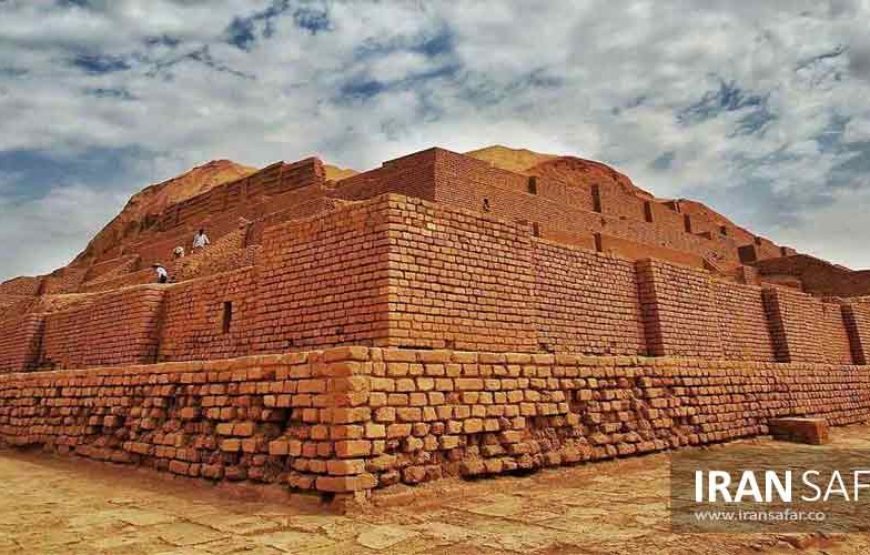
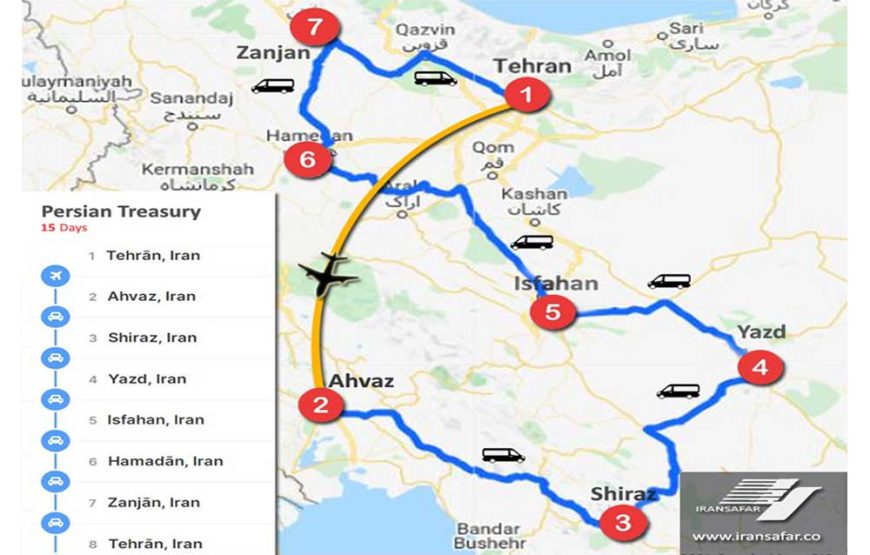
Our “Persian Treasury” trip starts in the capital city of Tehran, then we fly south to Ahvaz to take opportunity of a short visit of Susa, the oldest inhabited cradle of civilization – the land of Ziggurats.
Shiraz will be our next destination that we drive to; the homeland of the Persian Poetry, the Perisan Gardens, and also Persepolis – the incredible legacy of Achaemenid Empire.
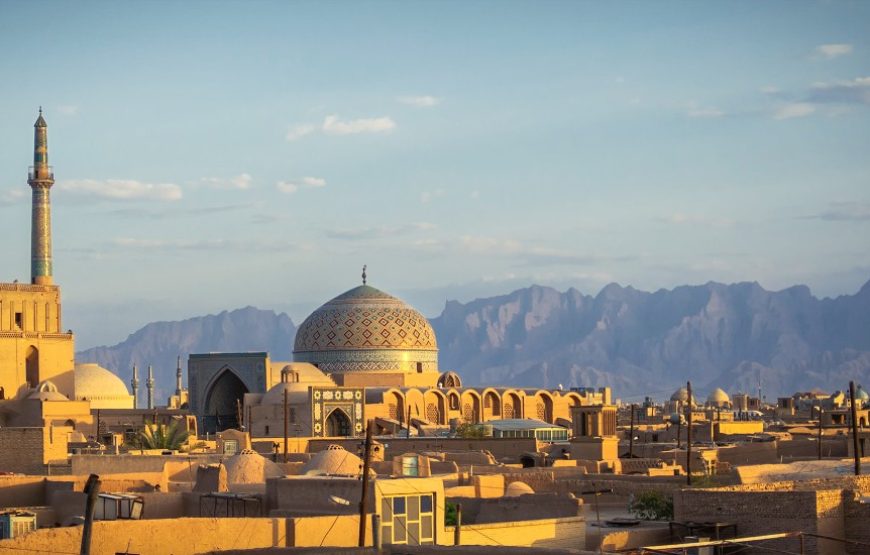
Our trip continues with Yazd, an amazing desert city famous for its Islamic architecture, wind Towers, Persian Qanats, mosques, minarets, and desert life style.
After Yazd, we will visit Isfahan, an amazing city titled ‘half the world’ according to a 16th century adage; After spending a few days here, you may well agree! Isfahan is the home to fine Islamic buildings, blue mosaic tiles, fascinating bazaar, superb palaces, tranquil gardens and picturesque bridges crossing the Zayandeh rud river.
The journey ends with interesting cities of Hamadan, Kermanshah and Zanjan; Cities You can learn about inside our travel blog.
Duration: 15 Days
Cities to be visited: Tehran | Susa | Sushtar | Shiraz | Yazd | Isfahan | Hamadan | Kermanshah | Zanjan | Qazvin
Iran, situated at the crossroads of Central Asia, Europe, and the Arabian Peninsula, is one of the most fascinating destinations in the world; a land where ancient civilizations have shaped the course of culture and heritage for millennia.
The “Persian Treasury” traces the magnificent legacies of the Persian Empire—an inspiring journey through time that includes visits to ancient cities like Susa and the awe-inspiring Ziggurats of Chogha Zanbil. Along the way, travelers will encounter the dramatic landscapes of the Alborz Mountains in the north and the rugged Zagros Mountains in the west. From snow-capped peaks to vast deserts and timeless oasis towns, every step of this diverse itinerary brings spontaneous moments of connection with locals and deep cultural insight.
Upon arrival, you’ll be greeted at the airport by your local guide, who will accompany you on the drive into the heart of the city.
Your exploration of Iran’s dynamic capital, Tehran, begins with a visit to the National Museum of Iran. This outstanding institution houses an impressive collection of artifacts spanning from 5,000 BC to the early Islamic era, offering a fascinating overview of the country’s deep historical roots and cultural development.
Next, we continue to the magnificent Golestan Palace Complex, a UNESCO World Heritage Site and one of the crowning achievements of Qajar-era architecture. Within its beautifully landscaped gardens, you’ll discover splendid halls and pavilions adorned with intricate mirror work, vivid tile mosaics, and elegant paintings—each reflecting the refined artistry of the Qajar dynasty.
Our final stop for the day is the vibrant Tehran Grand Bazaar. Wander through its maze of lively corridors lined with stalls selling everything from spices and carpets to handmade crafts. It’s an ideal spot to experience the local atmosphere and perhaps pick up a few memorable keepsakes.
Today, we set out to explore some of Tehran’s most remarkable modern landmarks.
Our day begins at the Sa’ad Abad Palace Complex, once the royal residence of Mohammad Reza Shah, his father Reza Shah, and other members of the Pahlavi dynasty. Spread across 180 hectares of lush gardens at the foot of the Alborz Mountains, this expansive estate is the largest cultural complex of its kind in modern Tehran. Within its grounds lie several exquisite palaces—each a reflection of the elegance, artistry, and grandeur of Iran’s 20th-century monarchy.
Next, we enjoy a leisurely stroll across the Tabiat Bridge, an award-winning architectural marvel that gracefully links two of Tehran’s most picturesque parks. From this scenic vantage point, you’ll be treated to sweeping panoramic views of the city and surrounding mountains—an ideal spot to pause and soak in the urban landscape.
We then head to the Tajrish Local Market in northern Tehran, a vibrant bazaar brimming with color and life. Here, you can mingle with locals, browse an array of traditional goods and handicrafts, and savor authentic flavors from across the region.
Our day concludes at the iconic Azadi Tower, one of Tehran’s most recognizable landmarks. With its striking fusion of traditional and modern design elements, this monument stands as a proud symbol of Iran’s contemporary identity and enduring spirit.
We begin the day with an early morning departure from Ahvaz, heading towards Shush (ancient Susa) to explore its remarkable historical sites. Highlights include the Apadana Palace, a magnificent relic of the Achaemenid Empire, and the Tomb of Daniel, an important religious and cultural landmark.
In the afternoon, we continue to Shushtar, home to the UNESCO-listed Historical Hydraulic System, a masterpiece of ancient engineering. Here, we’ll also visit other significant historical landmarks before returning to Ahvaz in the evening.
We depart from Ahvaz early in the morning for a scenic drive to Bishapur, the ancient Sassanian city founded by King Shapur I in the 3rd century AD. Nestled in a fertile valley between the Zagros Mountains and the Shapur River, Bishapur once stood as a symbol of the Sassanian Empire’s architectural grandeur and artistic mastery.
Upon arrival, we explore the archaeological site of Bishapur, where remnants of palaces, temples, and intricate mosaics tell stories of royal ceremonies and ancient urban life. Of special note are the magnificent rock reliefs depicting Shapur I’s victories over the Roman emperors — powerful scenes that highlight the might and sophistication of the Sassanian dynasty.
We then continue to Tang-e Chogan, a stunning river valley just north of Bishapur, surrounded by rugged cliffs and lush scenery. The valley is renowned for its series of monumental bas-reliefs carved into the rock faces, each illustrating royal triumphs, hunting scenes, and ceremonial processions — masterpieces that blend history with the natural beauty of the landscape.
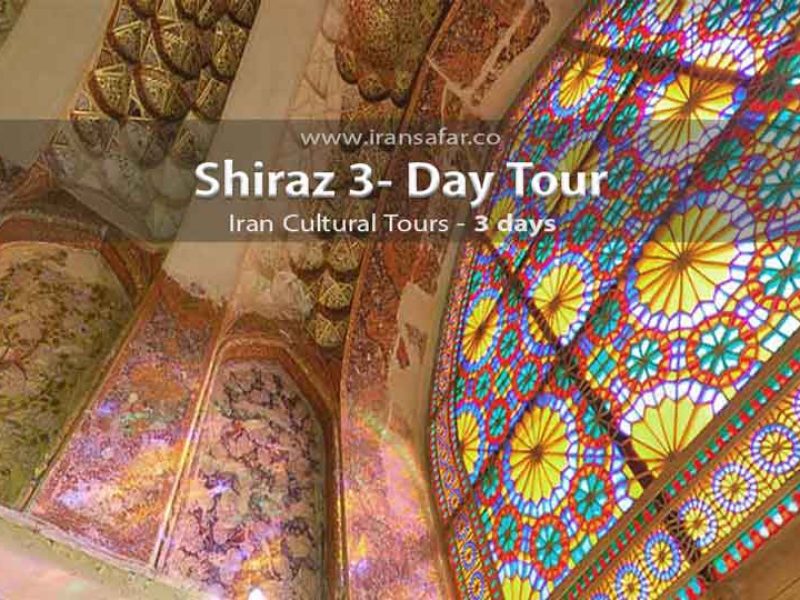
This morning’s journey begins at the enchanting Nasir al-Molk Mosque, famously known as the Pink Mosque. Completed in 1888 during the Qajar era, this architectural gem is celebrated for its mesmerizing stained-glass windows and vibrant pink tiles. As sunlight streams through, it creates a breathtaking kaleidoscope of color—earning it a place among Iran’s most photographed landmarks.
A short stroll brings you to the fragrant Narenjestan Garden (Qavam House), a 19th-century masterpiece built by the distinguished Qavam family. Here, elegant mirrorwork, intricate wood carvings, and rows of flourishing orange trees reflect the refined artistry of the era.
Next, visit the Imamzadeh Ali ibn Hamzeh Shrine, a serene spiritual haven adorned with exquisite mirror mosaics that shimmer in every direction, creating an atmosphere of peace and reverence.
Continue to the Vakil Mosque, a stunning example of Zand architecture, admired for its graceful arches and richly decorated tilework. Just steps away lies the Vakil Bazaar, a vibrant labyrinth of vaulted corridors filled with shops offering local handicrafts, spices, and textiles—an authentic taste of Shiraz’s traditional life.
Conclude your day at the Tomb of Hafez, set amid tranquil gardens where poetry and nature intertwine. Here, pay homage to one of Iran’s most cherished poets and reflect on his timeless verses.
Our journey today begins at the Persepolis Complex (UNESCO World Heritage Site), where we’ll arrive early to experience its majesty in the calm of the morning. Founded by Darius I around 512 BC, Persepolis was the ceremonial heart of the vast Achaemenid Empire—once the greatest empire in the ancient world. Over the centuries, rulers such as Xerxes I expanded its grandeur, creating a breathtaking ensemble of palaces, monumental staircases, and intricate bas-reliefs that tell the story of Persia’s imperial power and artistry. During our guided tour, we’ll spend about three hours uncovering the fascinating history and symbolism behind these ancient ruins.
A short drive brings us to Naqsh-e Rostam (UNESCO Site), the royal necropolis of the Achaemenid kings. Here, immense rock-cut tombs are carved high into the cliffs, believed to house the remains of Darius the Great and his successors. Below them, Sassanian reliefs portray vivid scenes of coronations, triumphs, and divine encounters—capturing over a millennium of Persian heritage in stone.
We end the day at the historic Quran Gate, once the grand northern entrance to Shiraz. In centuries past, travelers would pass beneath its arch, blessed by the holy Quran placed within the gate—symbolizing protection and safe passage into the city.
Today, we embark on a remarkable 550 km journey from Shiraz to Yazd, traveling through some of Iran’s most scenic and historically significant landscapes.
Our first stop is Pasargadae (UNESCO World Heritage Site), the ancient capital of the Achaemenid Empire and the final resting place of its visionary founder, Cyrus the Great. Established in the 6th century BC, Pasargadae embodies the birth of the Persian Empire. As you wander among the remains of royal palaces, gardens, and fortifications, you’ll feel the echoes of a civilization that shaped much of the ancient world.
Continuing our drive toward Yazd, we’ll arrive at the city’s outskirts to explore the Towers of Silence—striking circular structures that crown the desert hills. These ancient Zoroastrian towers were once used for sky burials, a sacred practice where the deceased were returned to nature. Standing atop the quiet plateau, surrounded by vast desert views, offers a profound glimpse into one of the world’s oldest faiths and its enduring traditions.
Today, we explore Yazd, one of the world’s oldest continuously inhabited cities and a UNESCO World Heritage Site. Nestled in the heart of the desert, Yazd’s historic center—with its labyrinthine alleys, sun-baked mudbrick houses, and graceful wind towers (badgirs)—stands as a remarkable testament to human ingenuity and adaptation to arid life. Deeply rooted in Zoroastrian tradition, the city holds a special place in Iran’s cultural and spiritual landscape.
Our journey begins at the Zoroastrian Fire Temple, home to a sacred flame that has burned for more than 1,500 years. Revered as a symbol of purity and eternal light, it embodies the enduring faith of Yazd’s Zoroastrian community and offers a moment of calm reflection amid the city’s history.
Next, we visit the Amir Chakhmaq Complex, a 15th-century architectural masterpiece at the heart of Yazd. Built under the patronage of Amir Jalal al-Din Chakhmaq, this grand structure once served as a tekyeh—a gathering place for religious ceremonies. Its symmetrical niches and elegant façade are especially captivating at dusk, glowing warmly in the desert’s golden light.
We then continue to the Jameh Mosque of Yazd, an exquisite 14th-century mosque renowned for its intricate blue tilework and soaring minarets—the tallest in Iran. This striking example of Islamic architecture reflects the city’s artistic refinement and spiritual devotion.
Finally, we take time to wander through Yazd’s ancient old town, a maze of narrow lanes, serene courtyards, and earthen walls. Here, life moves at a timeless pace, and every corner reveals a glimpse of the city’s enduring charm and heritage.
This morning, we depart from Yazd and make our way to Isfahan, one of Iran’s most captivating and elegant cities. The journey unfolds across vast desert plains, punctuated by stretches of pistachio orchards and traditional villages—a serene drive through the heart of central Iran.
Our first stop is the Meybod Caravanserai, a beautifully preserved roadside inn that once welcomed weary travelers along the ancient Silk Road. Stepping inside its sturdy brick walls, you can almost imagine the merchants, camels, and caravans that passed through centuries ago, trading goods and stories between East and West.
We continue to the Jameh Mosque of Nain, one of Iran’s oldest and most architecturally significant mosques. With its simple yet elegant brickwork, delicate stucco carvings, and centuries of history, it offers a fascinating glimpse into early Islamic design and devotion.
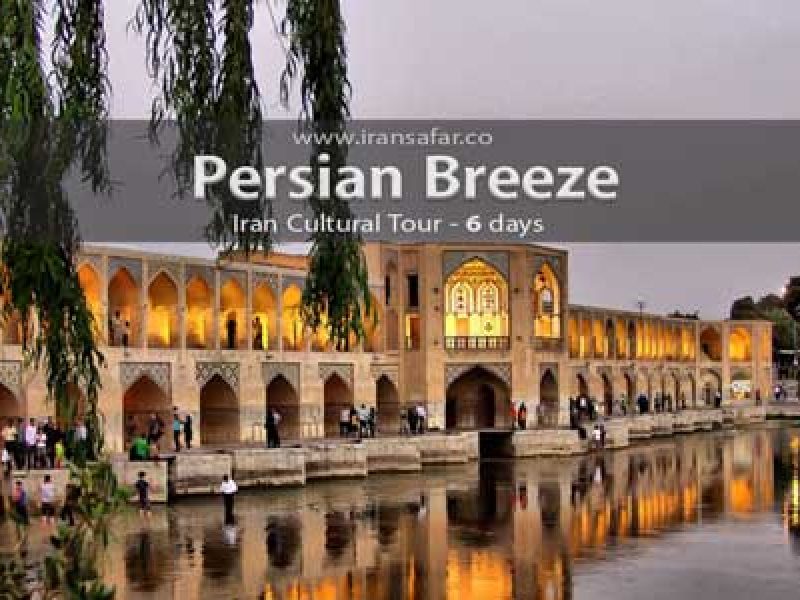
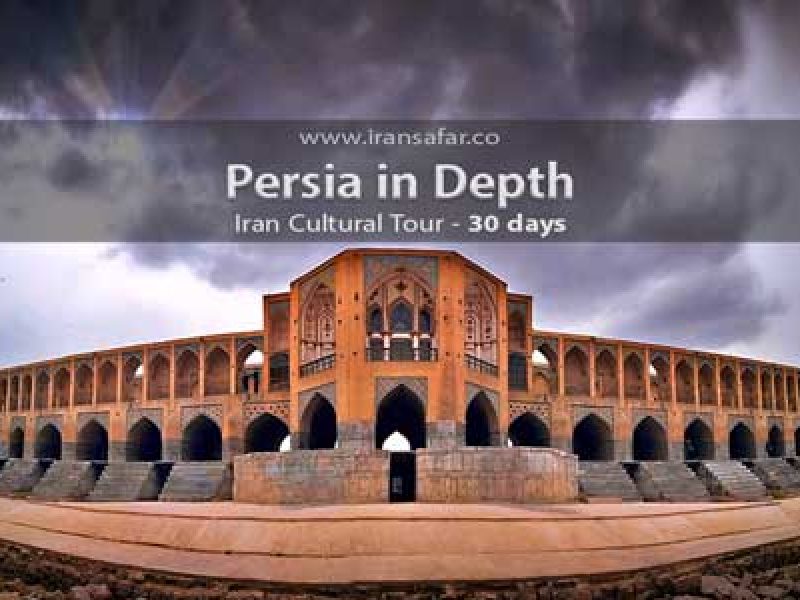
Upon arrival in Isfahan, we’ll begin our exploration with a visit to the Khaju Bridge—a Safavid-era masterpiece that serves not only as a bridge but also as a gathering place for locals. In the evening light, when the arches glow and the reflections shimmer across the Zayandeh River, it’s easy to see why Isfahan is often called “half the world.”
Today’s sightseeing begins at the magnificent Naqsh-e Jahan Square, a UNESCO World Heritage Site and one of the largest and most impressive squares in the world. Constructed in the early 17th century under Shah Abbas I, this grand plaza is framed by some of the finest Safavid-era architectural masterpieces.
Our first stop is the Imam Mosque, renowned for its soaring dome and intricate blue tilework. A true jewel of Islamic architecture, the mosque’s elaborate mosaics and elegant design make it one of Iran’s most iconic religious sites.
Next, we visit the Sheikh Lotfollah Mosque, famous for its delicate dome and exquisite tile patterns. Originally built as a private mosque for royal women, its harmonious proportions and intricate interior decoration make it a masterpiece of Persian artistry.
From there, we explore the Ali Qapu Palace, a six-story royal residence that overlooks the square. The palace is famous for its music hall, where unique acoustics and ornate stucco work create a sensory experience unlike any other. Visitors can also enjoy panoramic views of Naqsh-e Jahan Square from its upper terraces.
Our journey continues to the Qeisarieh Bazaar, the bustling heart of traditional Isfahan commerce. Here, narrow alleys are lined with shops offering handcrafted carpets, textiles, spices, and souvenirs—a vibrant glimpse into the city’s artisanal heritage.
Finally, we visit the serene Chehel Sotun Palace, set within a beautiful garden centered around a reflecting pool. This elegant pavilion, built for royal receptions and celebrations, is adorned with magnificent murals depicting scenes from Persian history and court life.
We begin the day in Isfahan’s Julfa Armenian District, a picturesque neighborhood established in the early 17th century when Shah Abbas I relocated an Armenian community here. The area offers a fascinating blend of Persian and Christian influences, with quaint streets lined with cafés, art galleries, and artisan shops, perfect for leisurely exploration.
Our first stop is Vank Cathedral, a remarkable church built in the mid-1600s. Its interior is a feast for the eyes, featuring intricate frescoes, gilded woodwork, and vibrant blue-and-gold tiles that depict both biblical stories and the history of the Armenian community in Iran.
Next, we visit the Jameh Mosque of Isfahan, a UNESCO World Heritage Site and a living testament to over a thousand years of architectural evolution. From its early Abbasid brickwork to the magnificent Safavid-era tile decoration, the mosque showcases a remarkable fusion of styles and periods, making it one of Iran’s most historically significant religious sites.
We conclude our day at the Si-o-se Bridge, one of Isfahan’s most iconic landmarks. Spanning the Zayandeh River with its 33 arches, the bridge is not only a marvel of Safavid engineering but also a beloved gathering place. It’s an ideal spot for a sunset stroll, where the reflections of arches in the water and the evening lights create a truly magical atmosphere.
Today, we set out on a scenic 320 km mountain drive from Isfahan to Hamedan, tracing a route that winds through dramatic landscapes and historic towns. Along the way, we’ll stop in Kashan, an ancient oasis city located about 250 km south of Tehran. Nestled at an altitude of 1,600 meters on the edge of Iran’s central salt desert, Kashan is renowned for its rosewater distilleries, fine handwoven carpets, and remarkable Persian architecture.
Kashan has long been admired for its beauty and craftsmanship—it was, in fact, a favorite city of Shah Abbas the Great, the visionary 16th-century Safavid ruler who contributed immensely to Iran’s cultural and architectural golden age. Archaeological findings suggest that Kashan’s history stretches back to prehistoric times, making it one of the oldest continuously inhabited settlements in the region.
Our visit begins at the Fin Garden (UNESCO World Heritage Site), one of the most exquisite examples of a Persian garden. Designed in the 16th century, it perfectly blends natural beauty with architectural harmony—flowing fountains, cypress trees, and pavilions combine to create a serene oasis that once hosted royal ceremonies and gatherings.
Next, we explore the Tabatabaei Mansion, a masterpiece of traditional residential architecture built in the 19th century. Its elegant stained-glass windows, intricate stucco work, and graceful courtyards reflect the artistry and sophistication of Kashan’s wealthy merchant class.
Continuing our journey toward Hamedan, we arrive in the evening and visit the Avicenna Complex, dedicated to the great Persian philosopher and physician Ibn Sina (Avicenna), whose contributions to science and medicine influenced both East and West.
Today we depart from your accommodation in Hamedan and head toward Kermanshah, beginning with a visit to the Kangavar Temple, a historic and spiritual site that reflects the architectural and religious traditions of ancient Iran.
Next, we explore Bisotun (Bistoon), a UNESCO World Heritage Site renowned for its monumental rock inscriptions commissioned by Darius the Great. These carvings, etched into the cliffside, chronicle the achievements of the Achaemenid Empire and provide a fascinating glimpse into Persia’s ancient history.
We then visit Taq-e Bustan, another UNESCO World Heritage Site, famous for its remarkable Sassanian bas-relief sculptures. The intricate carvings depict royal ceremonies, hunting scenes, and the grandeur of Sassanian art, offering a vivid window into the culture and power of this ancient dynasty.
After this journey through Iran’s rich historical heritage, we return to Hamedan, concluding a day filled with culture, art, and discovery.
Today, we embark on a scenic drive to Zanjan, with a remarkable stop at Alisadr Cave, the world’s largest water cave. Glide along its underground waterways by boat and marvel at the stunning stalactites, stalagmites, and natural formations that have developed over thousands of years—a truly magical experience that feels like stepping into another world. After exploring this geological wonder, we continue our journey to Zanjan, arriving in the evening to settle in for an overnight stay in this historic city.
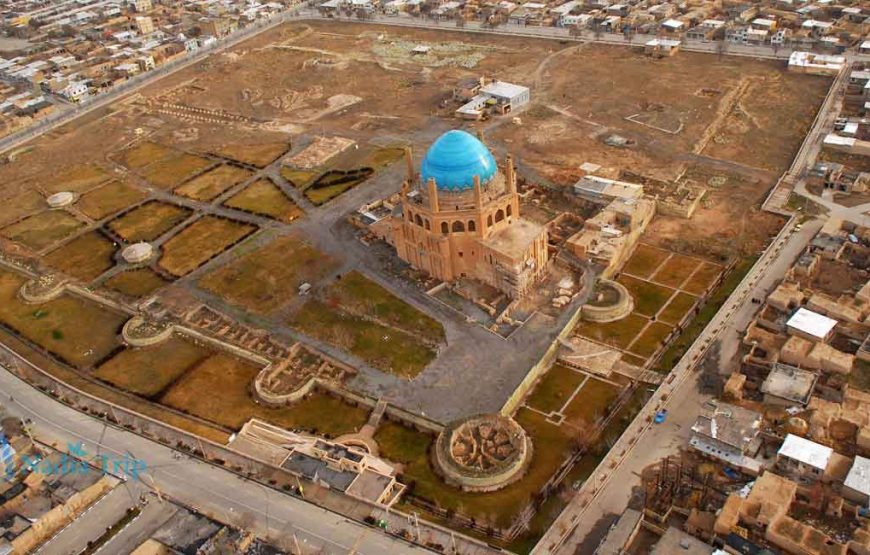
On your final day, we first Visit the Soltaniyeh Dome, a UNESCO World Heritage Site and one of the largest brick domes in the world, showcasing the pinnacle of Ilkhanid architecture, then we drive to Qazvin, a city with a rich historical background and stunning examples of traditional Persian architecture. Begin your visit at the Shahzde Hossein Shrine, a peaceful and spiritual site that highlights Qazvin’s architectural charm. Afterward, head to the Jameh Mosque of Qazvin, one of the oldest mosques in Iran, which showcases intricate tile work and historic significance.
Next, take a stroll through the bustling Sa'do Saltaneh Bazaar, where you can experience the vibrant local culture and shop for traditional handicrafts. For a final taste of Qazvin's grandeur, visit the Chehel Sotoun Palace, a splendid example of Persian royal architecture, offering serene gardens and beautiful frescoes.
After soaking in the sights of this ancient city, continue your drive to Tehran.

Wonderful Iran Tour!